Inverter View
Touchscreen Based Remote Monitor
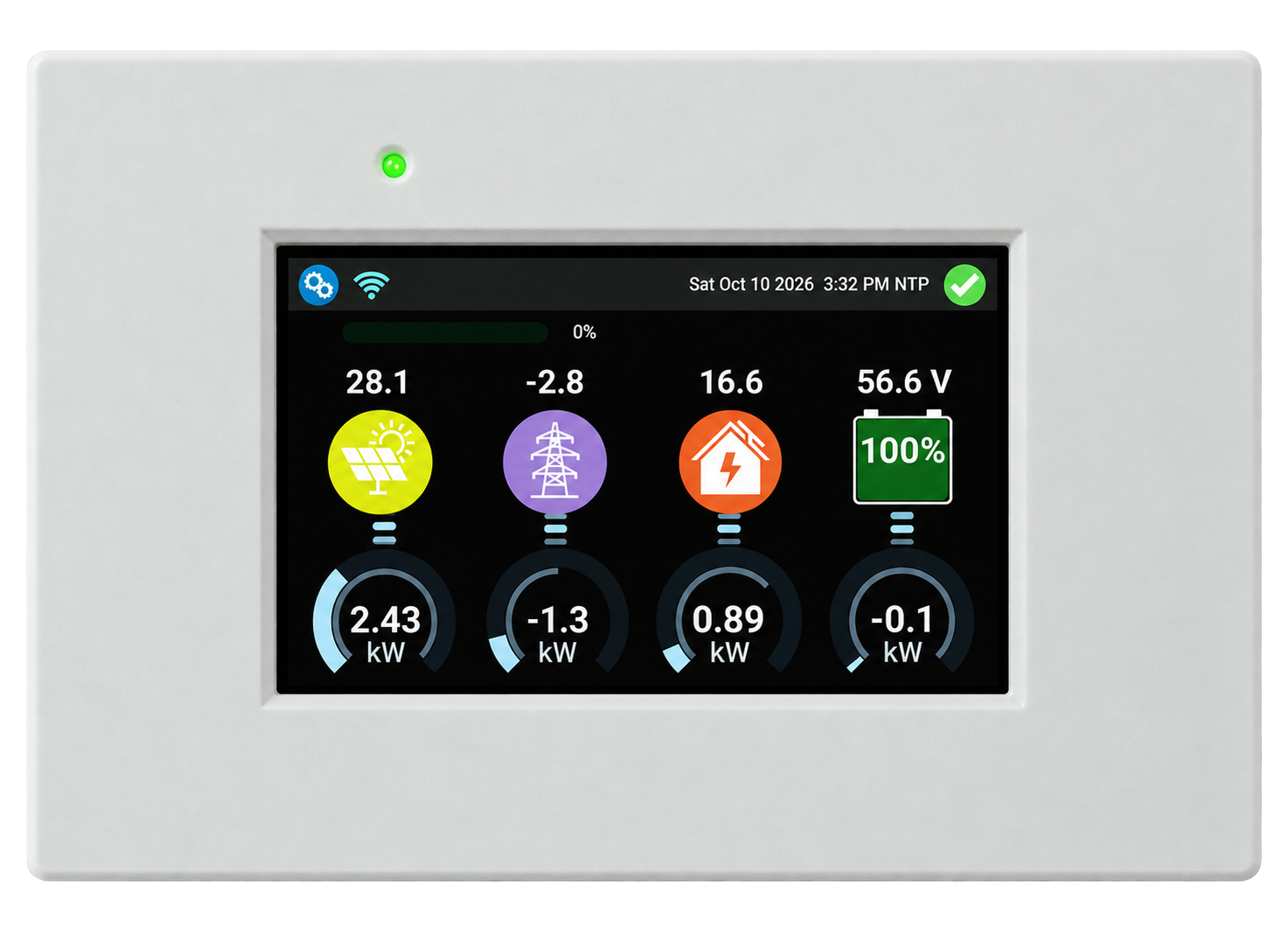
The Inverter View is a wall-mounted display designed to provide real-time insights into your solar energy system. It connects directly to your Sol-Ark inverter via RS-485, eliminating the need for Wi-Fi or apps. This plug-and-play device offers precise, essential data at a glance, making solar monitoring effortless.
Inverter Compatibility
Sol-Ark: 8K, 12K, 15K
Alerts
27 Individual Alarms
Realtime Data
10 Datapoints, including Maximum and Minimum tracking HMI with gauges and sliders
WiFi Capable
Remote firmware upgrades Network Time Protocol (NTP) capable Keeps time and date synced; not required for use
Installer Partnerships
An upgrade your customers can use every day
Offer Inverter View as an optional addition to your Sol-Ark installations.
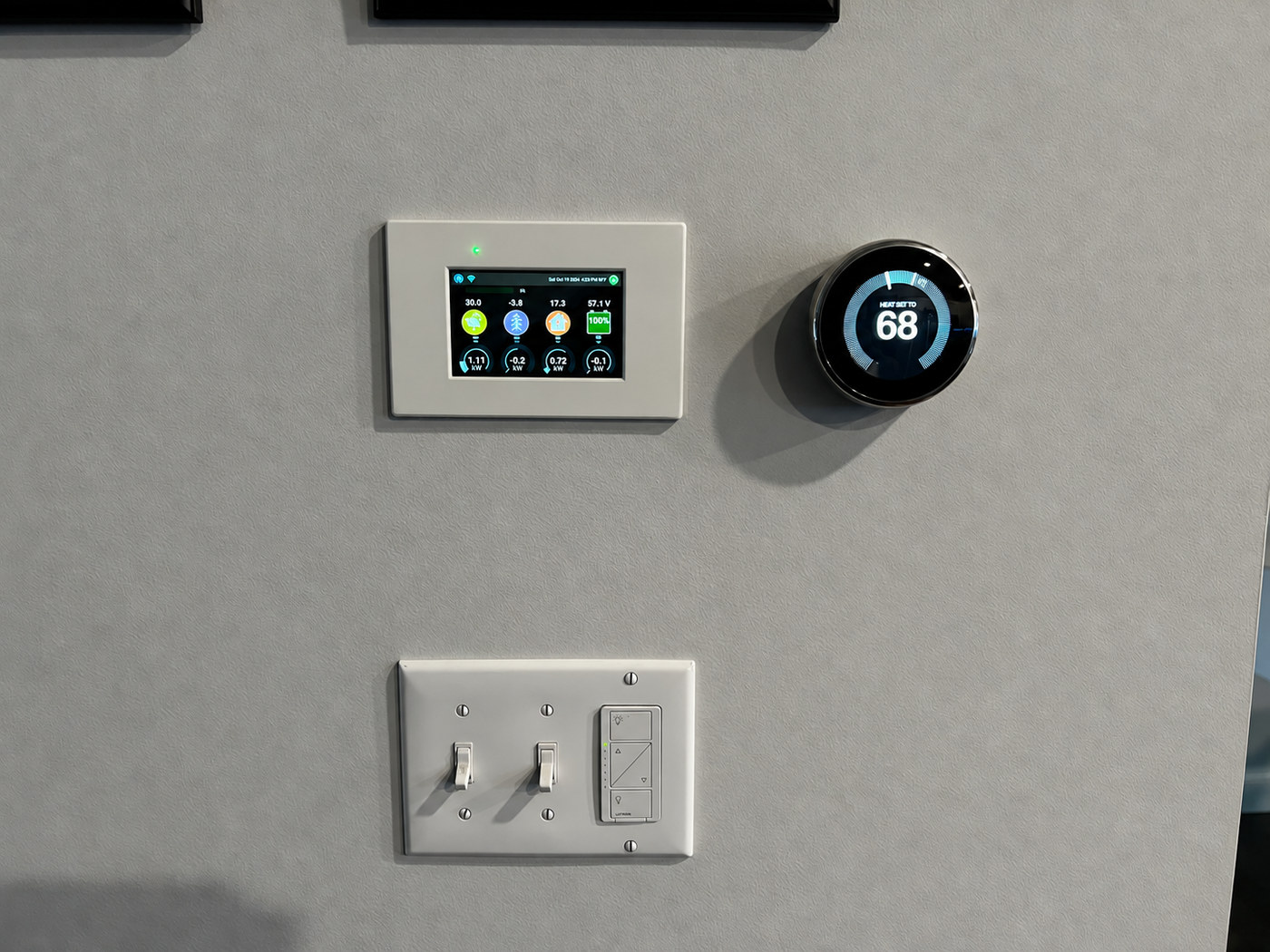
Give customers a wall-mounted display in a convenient location—near their thermostat, in the kitchen, or wherever they regularly check their home’s status. They can see what their solar system is doing without opening an app or walking out to an inverter in the garage, basement, or outdoors.
Include the device and installation in your proposal, with customer pricing that fits your business. Solar-ID supplies the display; you bring convenient, everyday monitoring to your customers.
Discuss an Installer Partnership
Integrated Display and Interface Board
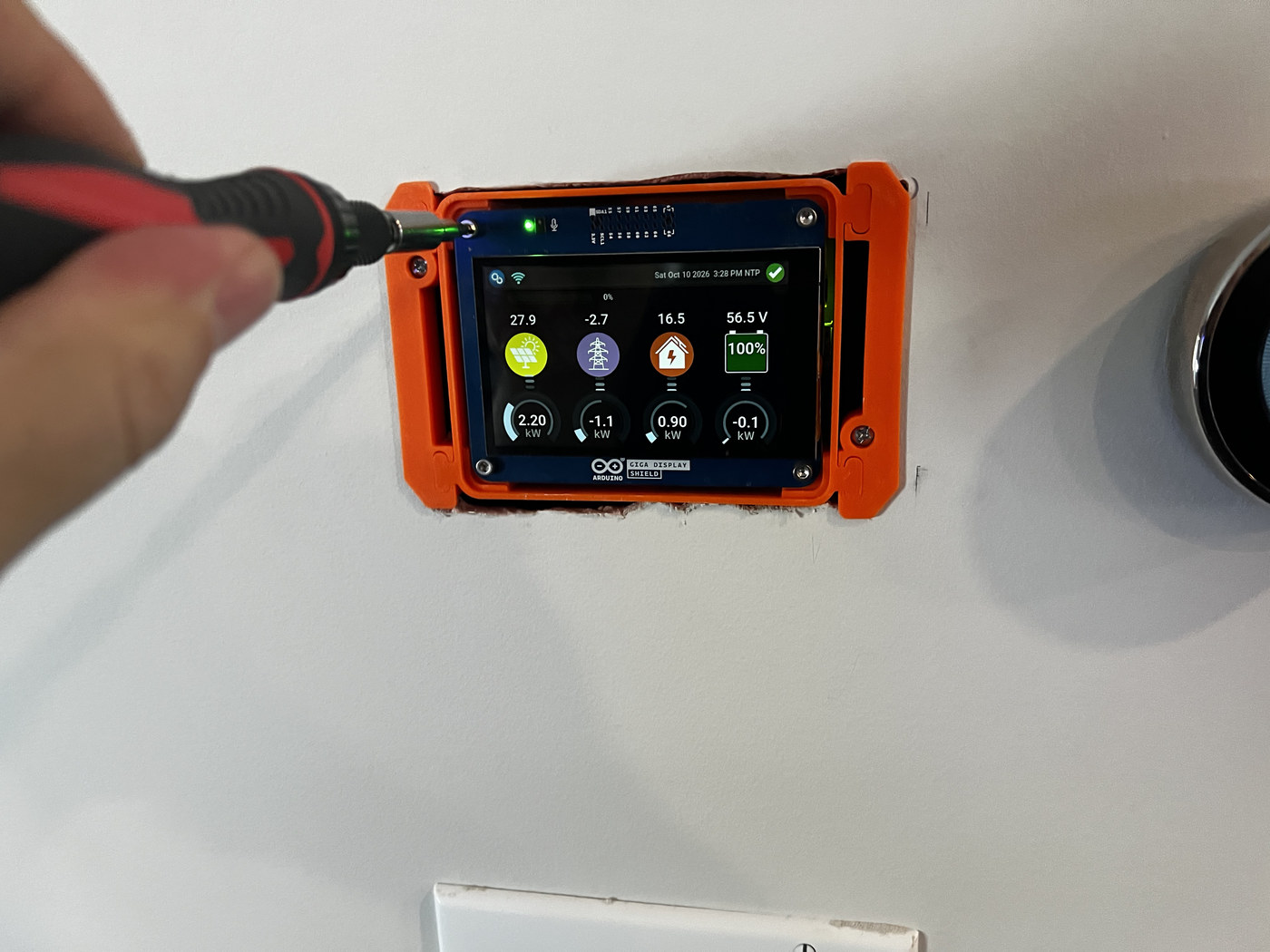
The Integrated Display and Interface Board combines a high-resolution, always-on display with built-in communication electronics explicitly designed for direct integration with your inverter. Engineered for reliability and ease of installation, this board provides seamless RS-485 communication and intuitive status visualization. Its compact, integrated design ensures straightforward mounting and minimal cabling, simplifying installation while enhancing the clarity and accessibility of your solar energy system’s critical information.
MODBUS Protocol
The Inverter View utilizes RS-485 via the Modbus RTU protocol to reliably connect to your inverter, providing real-time system data in a clear and efficient manner. RS-485 is a robust serial communication standard widely used in industrial and solar energy applications due to its reliable, noise-resistant signaling over long cable lengths (up to 4,000 feet). It supports multi-point (bus) topologies, allowing multiple devices to communicate over just a single twisted pair.
Realtime Data
| Metric | Units |
|---|---|
| Total solar/PV power | kW |
| Grid import/export power | kW |
| Home/load power | kW |
| Battery charging/discharging power | kW |
| Battery state of charge | % |
| Battery voltage | V |
| Solar energy generated today | kWh |
| Net grid energy today—import positive, export negative | kWh |
| Home energy consumed today | kWh |
| Grid share of today’s consumption—net grid energy ÷ home energy | % |
Alerts and Status Changes
- Grid power lost
- Low battery
- Critically low battery
- Ground-fault protection relay fault
- Grid operating mode changed
- Excessive DC current
- Excessive AC current detected by software
- Ground-fault protection failure
- Excessive AC current detected by hardware
- DC overcurrent protection tripped
- Emergency stop activated
- Ground-fault current protection tripped
- DC insulation or isolation fault
- Internal DC voltage imbalance
- Parallel inverter system fault
- Excessive AC current
- AC output overloaded
- High AC voltage between W and U
- High AC voltage between W and V
- Grid voltage too high
- Parallel inverter auxiliary fault
- Grid frequency too high
- Grid frequency too low
- DC voltage too high
- DC voltage too low
- Grid current fault on phase U
- Manual shutdown
- AC inductor current fault on phase B
- Electrical arc detected
- Inverter temperature too high